

The delay of a key U.S. Senate vote on a major crypto market structure bill has triggered sharp reactions across Washington and the digital asset industry.
After the Senate Banking Committee postponed its planned markup, the White House accused Democratic lawmakers of acting in bad faith. Officials said Democrats were already prepared to block the bill, even after multiple compromises were added to address their concerns.
Patrick Witt, Executive Director of the President’s Council of Advisors for Digital Assets, said Senate Banking Democrats were ready to vote unanimously against a bipartisan bill that had already lost industry support due to those concessions.
Industry Reaction to the Delay
The delay followed a major shift from the private sector. Just hours before the vote scheduled for January 15, Brian Armstrong, CEO of Coinbase, withdrew support for the draft legislation.
Armstrong said the bill contained too many problems, including limits on stablecoin rewards and provisions he described as effectively blocking tokenized equities. In his view, the current regulatory situation was preferable to passing a flawed bill.
In a later interview with CNBC, Armstrong argued that banks should not be allowed to shape crypto rules in a way that reduces competition and harms consumers. He added that the delay could create an opportunity to revise and improve the legislation.
Disagreement Over How to Fix the Bill
Not everyone in the policy space agreed on the path forward. Jake Chervinsky, Chief Legal Officer at crypto investment firm Variant Fund, suggested removing tokenized securities from the bill altogether to improve its chances of passing.
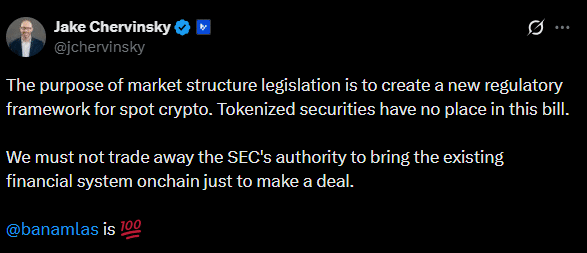
However, Miles Jennings, Head of Policy and General Counsel at Andreessen Horowitz, rejected that idea. He said the bill does not prevent tokenized securities and that restating existing law does not change how the industry is regulated.
Jennings also pushed back on claims that the bill would remove oversight authority from the Securities and Exchange Commission.
Split Views Inside the Crypto Industry
Reports suggest the crypto industry itself is divided. While Coinbase publicly opposed the bill, other major players such as Ripple and Andreessen Horowitz were reportedly less critical of the draft.
All three companies are among the largest donors to Fairshake, a political action committee focused on crypto policy, highlighting the lack of unified industry messaging.
What Happens Next
There is ongoing speculation about whether the Senate Banking Committee could move forward with its markup before the Senate Agriculture Committee, which oversees the commodities side of the bill through the Commodity Futures Trading Commission.
At the time of writing, no clear timeline had been set.
The bill aims to establish broad regulatory clarity, including how digital assets are classified, how oversight is divided between regulators, and what protections apply to investors. For now, disagreement among lawmakers and industry leaders continues to delay progress.